Where Do Weeds Take Root?
BMCC Sunday Sermon · 19 Jul 2026 · Speaker: Pastor Timothy
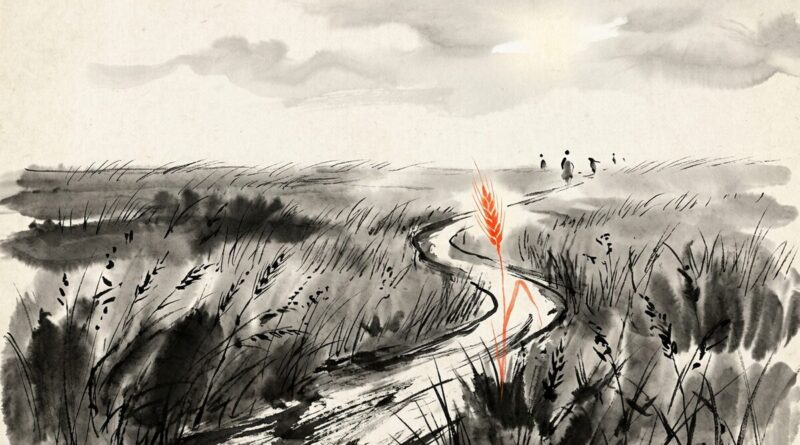
Is there any soil in the world where seeds grow into nothing but wheat, with no weeds ever appearing?
This question calls to mind the famous verse attributed to Huineng, the Sixth Patriarch of Chan Buddhism: “The bodhi is not like a tree; the bright mirror has no stand. Originally there is not a single thing — where, then, can dust cling?” On Sunday 19 July 2026, Pastor Timothy of Blessed Ministry Community Church (BMCC) borrowed this image and reframed it as a question for our own time: Where do weeds take root?
The answer may be more unsettling than the question itself: everywhere.
From “Soil Problem” to “Enemy Problem”
The previous Sunday, Dr. Dino Wong had led the congregation through Matthew chapter thirteen, focusing on the parable of the soils — reminding us that a fruitful life requires Vision, Mission, and Patience. This Sunday, Pastor Timothy continued the journey through the same chapter, turning to a different parable: the wheat and the weeds.
The story is familiar: a man sows good seed in his field. While everyone sleeps, an enemy comes and scatters weed seeds among the wheat, then slips away. When the wheat sprouts and the weeds appear alongside it, the servants want to pull the weeds up. But the master says: “No — because while you are pulling the weeds, you may uproot the wheat with them. Let both grow together until the harvest.”
Pastor Timothy observed that last week’s parable centred on the soil — on the inner conditions of a person’s heart. This week, the problem is different: even good soil can have weeds deliberately sown into it by an adversary. The deeper challenge is not simply recognising that evil exists. It is asking: how do we follow Jesus in a world where righteousness and evil coexist?
The “Enemy” in Matthew’s Gospel
To understand the parable, Pastor Timothy traced the figure of the “enemy” across Matthew’s narrative, finding three distinct appearances.
The first: Satan directly tempting Jesus in the wilderness. The second — strikingly — is Peter, who urges Jesus not to go to Jerusalem to suffer and die. Jesus’s response is the same startling rebuke: “Get behind me, Satan!” The third: the adversary’s children appear in the end-times narrative of Matthew 24.
This tracing reveals something vital about how Matthew understands evil: it is not merely a supernatural force external to us, but a symbol of any power that opposes God’s will. Even Peter, Jesus’s closest companion, momentarily embodied this adversarial role when he tried to deflect Jesus from the path of suffering.
The implication is sobering: none of us is born immune to becoming the “enemy” in the story.
Where Is the Line? Who Is Wheat, Who Is Weed?
Jesus interprets the parable clearly — the good seed represents the children of the kingdom; the weeds are the children of the evil one. Yet Pastor Timothy pressed on a real tension: in practice, is this distinction as clear as it might seem?
He acknowledged that when we encounter this parable, we instinctively place ourselves in the “good seed” column — and assign everyone different from us, every differing theology, every person we consider wicked, to the category of “weeds.” But the parable itself presents a world where the line between righteousness and evil is genuinely hard to draw. Good is real. Evil is real. And our capacity to discern between them is more limited than we usually assume.
He offered a personal illustration: during a period of ministry, he had the opportunity to serve in a congregation with over a hundred years of history — one that included older believers who had come to faith in an earlier era, well-educated and from distinguished backgrounds, as well as newer believers who had encountered the gospel only later, through very different personal life journeys. One church, one faith — yet profoundly divergent understandings of justice, community life, and what it means to be faithful.
Who in that room were wheat? Who were weeds? The lines were not obvious.
This led Pastor Timothy to a more searching question: when we pursue justice, are we truly pursuing God’s justice — or our own version of it? The children of the kingdom, he said, are those who do the will of the Lord. That cannot be reduced to any single particular standpoint or cultural viewpoint. When we “lock down” justice and love into a narrow frame, we drain them of their fluidity and transforming power.
Where Do Weeds Take Root? Merton, Zen, and the Sinner Saved by Grace
The hardest line in the parable may be the master’s instruction: “Let both grow together.” Why not uproot evil immediately?
Agriculturally, the weed in question (likely darnel, a toxic grass) is nearly indistinguishable from wheat in its early stages, and its roots become intertwined with those of the wheat. Pulling the weeds inevitably damages the crop.
But Pastor Timothy’s insight reaches further still: the “field” in the parable is not only the world out there. It is also each of our own inner lives. Our own hearts, too, are fields where wheat and weeds grow side by side.
The homiletical centrepiece of the sermon was Pastor Timothy’s reworking of Huineng’s verse into the question “Where do weeds take root?” — opening a dialogue between Christian faith and Eastern wisdom. He then drew on a significant voice from the contemplative tradition: the American theologian and monk Thomas Merton, celebrated for his writings on contemplative prayer and his deep engagement with Buddhism and Zen.
Merton observed that many Christians become consumed with the project of becoming “blameless” — and in doing so, fall into the very legalism they sought to escape. The pursuit of moral perfection becomes its own form of bondage. Merton’s insight: we cannot become perfect disciples through our own effort; we cannot fully stand on the side of justice — because each of us, at our core, is a sinner saved by grace.
Pastor Timothy resonated with this: when we honestly face the weeds within our own lives, we are not simply confessing weakness — we are beginning to learn what it means to receive grace. From that posture, we no longer position ourselves on a moral high ground, claiming we are more spiritually advanced, more discerning about justice, more deserving than others. We release the anxiety and comparison that drives such striving, and we begin to live in the true freedom that belongs to us in Christ — a life justified not by our righteousness, but by God’s grace.
God became flesh and dwelt among us — this is pure gift, not a reward for being capable or worthy. When we recognize the weeds in our own lives, we discover a new capacity to live alongside others — people of every background, in all their complexity — sharing this world together.
Living Onward with Hope
This world does have evil. It does have injustice. But Pastor Timothy reminded the congregation: our reason for continuing to walk forward is hope. Not a hope contingent on whether justice has already prevailed in the present moment, but a hope rooted in a coming kingdom — God’s own ultimate renewal.
The final judgment, he reflected, is not only an act of separation and punishment. It is also a process of purification and new beginning. Until then, God allows weeds and wheat to grow together — an expression of profound mercy. He has not given up on any struggling seed. And our own lives are much the same — spaces where God works, step by step, to transform us from within.
So let us live with a posture of kenosis — self-emptying — carrying hope forward through a world full of injustice and hardship, trusting in the One who is still at work in us.
Blessed Ministry Community Church (BMCC) is a home that welcomes everyone. Wherever you are on your journey of faith — whether you feel your heart is still full of unresolved “weeds,” whether you carry questions about justice and suffering, or whether you are searching for a community where you can be genuinely yourself and know you are loved — there are people here who will walk alongside you. We believe that God’s grace is prepared for every person. Every Sunday, we gather in Hong Kong to worship the One who seeks us out even in our limitations and struggles. You are welcome here.