You Make Me Me — Knowing Ourselves in One Another’s Gaze
BMCC Sunday Sermon · 26 April 2026 · Speaker: Dr. Dino Wong
Can a person come to know themselves on their own? Dr. Dino Wong, brother of BMCC, took the congregation from Acts 2:42–47 into chapter 4:32–35, drew in the relational theology of Karl Barth, and finally landed on a concept he returns to again and again in his years of clinical psychology practice — re-parenting — weaving theology, psychology, and the daily practice of a faith community into a single thread.
Dino began by placing the text in its historical setting. In the Roman era, most land had fallen into the hands of the ruling class, and the majority of Jews lived on the edge of survival, squeezed between famine and heavy taxation. To become a Christian often meant being cut off from one’s family and losing the protection of one’s profession. The early church’s “all things in common” was less a moral virtue than a refuge that made it possible for believers to endure. Through the Spirit, the early believers came to a new understanding of wealth — property is only a temporary stewardship; they themselves are stewards before God. “All things in common” was no longer a rule but a new material ethic reshaped by the Spirit.
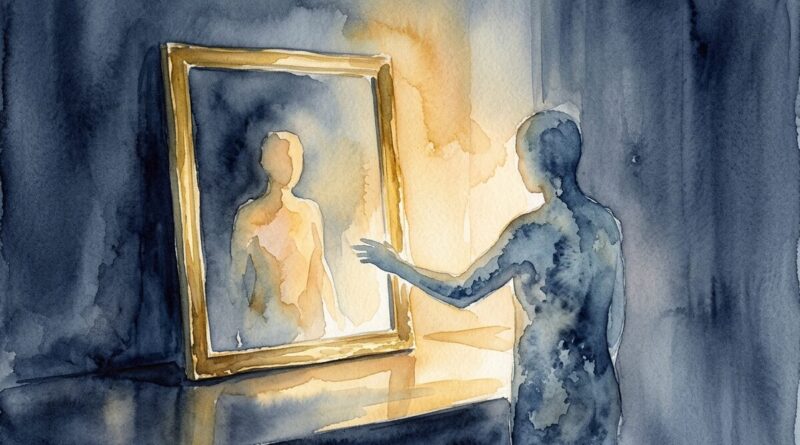
But the question Dino really wanted to surface was not merely “sharing.” He turned to Karl Barth: God’s essence has never been one of isolation, but of an eternal, loving communion between Father, Son, and Spirit. If we are made in the image of this relational God, then human beings were never designed to be self-contained, complete individuals. “We are like a mirror waiting to be lit,” Dino said. “In a completely dark room, even with a mirror right in front of you, you cannot see yourself.” He offered an image that hushed the room: an infant who never receives the gaze and attention of a parent or caregiver has no way to feel her own worth, and cannot even establish a clear distinction between “I” and “you.” Remember the opening scene of Inside Out? Her parents look at the infant and call her name — “Riley” — and it is in that very moment that consciousness is born: “I am called Riley; you and I are two distinct beings.”
From here, Dino brought the theology back into a scene every church member has known: the people in fellowship whom we find “hard to be around” or who “try too hard to be noticed.” The instinctive reaction is to avoid them, to gather afterwards in small clusters and talk around them. But relational theory sees it differently — that person’s “difficulty” is not a feature they alone carry; it is something the whole community has cultivated together. When we look at them with contempt or distaste, we are in fact confirming for them their deepest wound: “I am not worthy of love.” And so they can only arm themselves further, hold their defences tighter. “We are actually participants in shaping who they become,” Dino reminded us. “When we change the way we look at them, their understanding of themselves changes too. This is the power of intersubjectivity — in the same moment, we have the capacity to heal one another.”
He then turned the lens back on himself. Since 2018, Dino has given a number of interviews as a member of the LGBTQ+ community. At first he was extremely anxious — afraid of saying the wrong thing, afraid of being rejected. But as he sat in front of the camera, in front of his interviewers, and met one pair of curious, accepting, respectful eyes after another, his inner self began to shift. “When I am speaking, I am not only recalling the past; I am, in the other person’s gaze and in this present conversation, rethinking who I am.” Those who listened, he said, gradually set aside their pre-formed impressions of sexual and gender minorities because of his honest sharing; and because of their acceptance and affirmation, he came to realise that for many years he had no longer needed the defence mechanism he had once used to hide the fact that he loved men. “Life meeting life is itself a dynamic process that repeats again and again. Our identity is re-understood with every encounter.”
Dino has gathered this insight into a clinical method he calls re-parenting. It is not simply sitting and listening, or accepting whatever the other person does; it is accepting their worth and their fear, with the aim of letting them re-experience the confidence, support, reliability, and safety they lost in their younger years. Church life, in essence, is a continual process of being re-parented and re-formed — and its most concrete site of practice is the small group. Dino offered his own group, Be the Light, as an example: “People often say our group is just here to chat. But the reason we are like this is precisely because we have so many wounds that need to be heard and seen.” They meet once every two weeks, beginning at 8 p.m. — however many people come, he sits there and listens. There is only one rule: put down the phone, listen with full attention. Thirty to sixty minutes of non-judgmental attention per person allows those who have been weighed down by childhood wounds to feel, again, that “I do not have to earn the right to exist by performing”; they can lay down the armour and safely be themselves.
“This is the importance of the body and of embodied space,” Dino concluded. In a physical space, when you simply sit there and breathe, you are already participating in one another’s lives. You place your identity, your eyes, and your body into the room, and through the bodies around you God enters and shapes you. “With one heart and one mind” — this is not an abstract slogan but a group of people willing to entrust themselves to the same body, allowing that body to become the courage by which we bless one another, and accepting also the shaping the body brings.
Blessed Ministry Community Church (BMCC) is a home for everyone — we believe that no one has to first sort themselves out or have all the answers ready in order to encounter God. If you are living in a place where you cannot feel your own worth, or if you are walking into church with wounds that no one has ever seen well, you are welcome to come and sit within this body. Here, you will slowly be seen, slowly be re-parented, and slowly come to know that you have been beautiful all along.